

A stovetop kettle is one of the simplest tools in a kitchen, which is exactly why people stop paying attention to it. It gets filled, set on a burner, and forgotten until it whistles. Then one day the whistle sounds weaker, the bottom looks blotchy, or water starts leaking from a seam. Most of the time, that damage did not come from a defect. It came from a handful of habits that quietly wear kettles out long before their time.
The good news is that all of these habits are easy to change. None of them require special equipment or much effort, and avoiding them can add years to a kettle you already own.
1. Leaving the Kettle on High Heat Unattended
A kettle does not need full blast to boil. Cranking the burner to maximum gets water moving faster, but it also sends flames or glowing coil heat up the sides of the kettle, scorching the finish and baking mineral deposits onto the exterior. On stainless steel, that shows up as a rainbow-colored stain that never quite comes off. On enamel, it can eventually crack the coating.
The bigger risk is walking away. A kettle left on high heat will boil dry faster than most people expect, and that is when real damage happens. Stay nearby. If you need to step out of the kitchen, turn the burner off first.
As a general rule, once the water is at a rolling boil, there is no benefit to leaving the heat on high. If you want to keep the water hot, lower the flame to the smallest setting that maintains a simmer.
2. Letting the Kettle Boil Dry
Boiling dry is the single fastest way to kill a stovetop kettle. Water absorbs the burner's heat and carries it away as steam. Without water, that heat goes straight into the metal. The base warps, the interior coating on enamel or painted kettles blisters, and the whistle mechanism can deform so it no longer seals properly.
How do you know it has happened? The whistle stops, and the kettle goes silent. Some kettles develop a faint metallic smell or a hot, dry odor. If you catch it early, let the kettle cool completely before adding any water. Pouring cold water into a scorching hot kettle can warp the base or crack an enamel coating.
If a kettle has already boiled dry more than once, check the bottom for a bulge or wobble. A warped base will not sit flat on the burner, which creates uneven contact and hot spots from then on. At that point, replacement is usually the practical choice.
3. Using the Wrong Burner Size
Burner size matters more than most people realize. A small pot on a large burner wastes energy and sends heat up the sides. A wide kettle on a small burner heats slowly and unevenly, and the handle can sit too close to the flame.
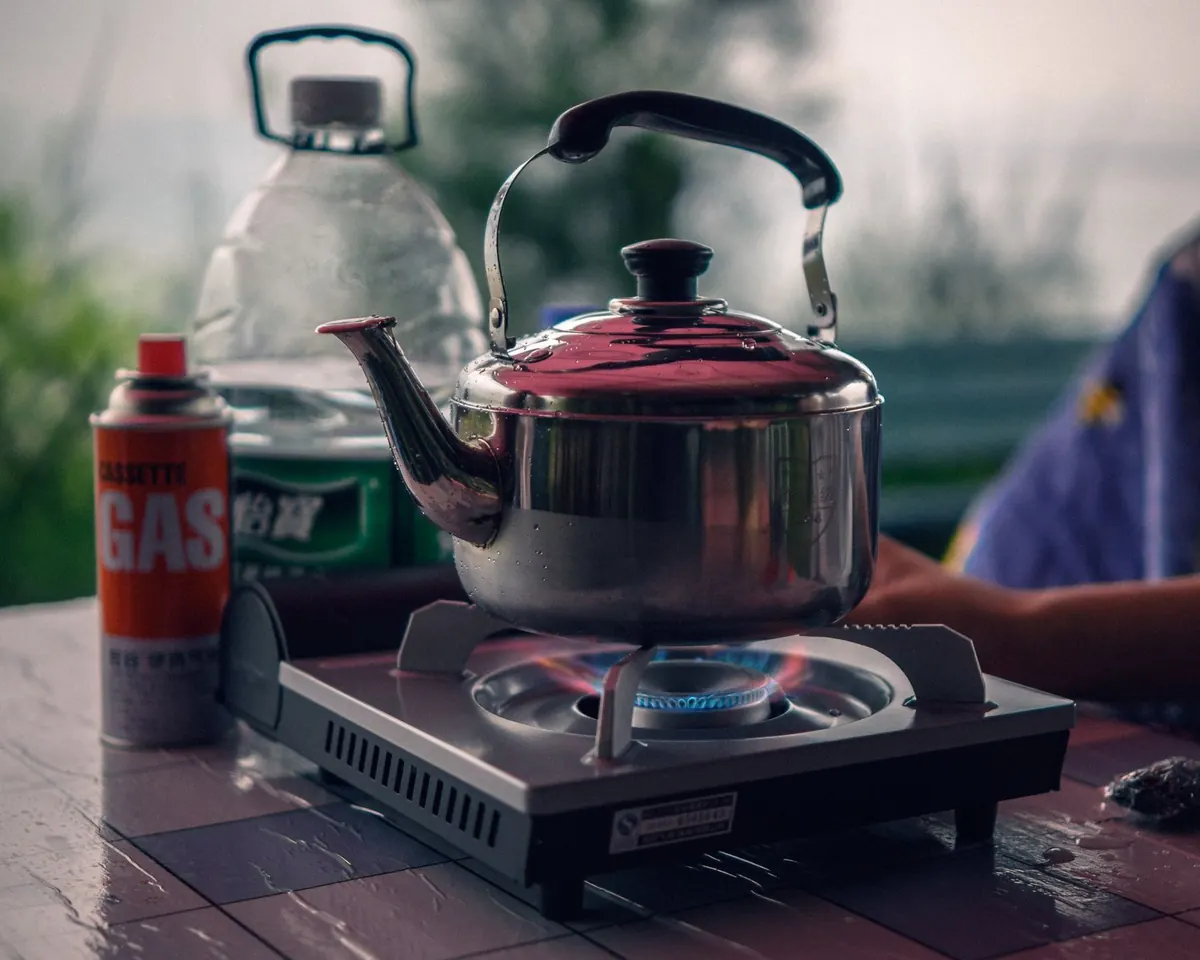
Match the burner to the base of the kettle. The flame or coil should sit under the base, not licking up the walls. On gas stoves, watch for flames curling around the sides; that is a clear sign the burner is too big or the heat is too high.
- Gas stoves: keep the flame tips under the kettle's base, never reaching the sides or handle.
- Electric coil stoves: the coil should be roughly the same diameter as the base.
- Glass or ceramic cooktops: the kettle must sit flat with full contact, and the surface should be clean before you set it down.
- Induction cooktops: the kettle needs a magnetic base. If a magnet will not stick to the bottom, it will not heat.
Also think about placement. Sliding a kettle across a glass cooktop can scratch both surfaces, and setting a kettle on a burner that is still hot from another pot can scorch the base before you even turn it on.
4. Filling Above the Maximum Line
Every kettle has a fill line for a reason. Overfilling sends boiling water surging out of the spout and, on whistling models, up through the whistle. That water lands on the stove, the counter, and sometimes your hand. It also leaves mineral residue around the spout and lid that builds up over time.
Filling too little is its own problem. A shallow layer of water boils away quickly, and the exposed upper walls of the kettle get far hotter than they should. Aim for the marked maximum, or just below it, and never boil a kettle that is less than about a quarter full.
5. Cleaning With the Wrong Tools or Products
Kettles rarely need aggressive cleaning. They usually need gentle, regular cleaning. Abrasive scouring pads and powdered cleansers scratch stainless steel, dull enamel, and strip the protective finish that keeps rust at bay. Once those fine scratches appear, mineral deposits cling to them more easily, and the cycle gets worse.
For everyday cleaning, warm water, a soft sponge, and a drop of dish soap are enough. For stubborn mineral buildup inside, a gentle descaler made from equal parts water and white vinegar works well:
- Fill the kettle halfway with the vinegar and water mixture.
- Bring it to a boil, then turn off the heat and let it sit for 20 to 30 minutes.
- Pour it out and rinse thoroughly with fresh water.
- Boil a full kettle of clean water and discard it to remove any lingering taste.
Never submerge an electric kettle or put a stovetop kettle with a sealed handle in the dishwasher unless the manufacturer says it is safe. Water trapped inside a handle can rust it from the inside out.
6. Ignoring the Exterior and the Handle
People scrub the inside and forget everything else. Lids, spouts, handles, and the base all collect grease, dust, and splatter. On gas stoves, a greasy exterior bakes into a hard film that discolors the finish and smells unpleasant every time the kettle heats up.
Wipe the outside with a damp cloth after each use, once the kettle has cooled enough to handle. Check the handle screws or rivets every few months. A loose handle is a burn waiting to happen, and tightening a screw takes seconds.
7. Storing the Kettle With Water Inside
Leaving water in a kettle between uses seems harmless, but standing water promotes rust, especially at seams, rivets, and any spot where the interior coating is already worn. It also encourages scale to harden in place. If you live in an area with hard water, the effect shows up quickly.
Empty the kettle after each use and leave the lid open so the interior can air dry. If the kettle has a tight-fitting lid, prop it slightly open rather than sealing in moisture.
Getting More Years Out of Your Kettle
Most kettle damage comes down to heat, water, and friction. Control those three, and the kettle will last far longer than the warranty suggests. Boil only what you need, match the burner to the base, empty and dry the kettle after every use, and descale it when you notice a chalky film or a change in how the water tastes.
If your kettle has already boiled dry, warped, or started leaking at a seam, it is usually not worth repairing. A leaking seam cannot be sealed reliably from the outside, and a warped base will keep causing hot spots. Replace it, then start fresh with the habits above. A kettle that is treated well can easily serve a household for a decade.
Photo: Ezequiel Milano / Pexels
Related posts
More stories you’ll love reading